

Table of Contents
- What Are Deer Flies and Why Their Bites Hurt So Much
- Symptoms of Deer Fly Bites and How to Identify an Allergic Reaction
- How to Stop Bug Bites Itching: Natural Remedies That Calm the Skin
- Natural Insect Repellent for Biting Flies: Prevention That Holds Up Outdoors
- Preventing Infection After a Deer Fly Bite
- Common Mistakes to Avoid When Treating Deer Fly Bites
- Conclusion
- Frequently Asked Questions
Last Updated: September 19, 2026
What Are Deer Flies and Why Their Bites Hurt So Much
Deer flies are stout, golden-eyed biting flies in the family Tabanidae, and their bites hurt because the female slices the skin open rather than piercing it. She then laps up the blood that pools in the wound.
Deer Fly Bites vs. Other Biting Fly Bites
Deer flies belong to the same insect group as horse flies. Both are far more painful than mosquitoes or black flies.
Here's how to tell them apart:
- Deer flies: Golden or dark eyes, dark bands on the wings, silent approach
- Horse flies: Much larger, solid dark wings, loud buzzing
- Black flies: Tiny, humpbacked, bite in swarms near running water
- Mosquitoes: Thin, whining, leave a raised itchy welt
CDC information on biting flies and their habitats
Symptoms of Deer Fly Bites and How to Identify an Allergic Reaction
A normal deer fly bite follows a predictable pattern. Knowing that pattern is what lets you spot the moment a bite stops being normal.
Why Some Bites React Worse Than Others
Deer fly saliva contains anticoagulants and proteins your immune system treats as foreign. The more times you've been bitten, the more sensitized your immune system becomes, which is why long-time outdoor workers sometimes react harder than first-timers. This is a well-documented pattern with biting flies, and it explains why two people bitten on the same hike can have very different welts.
Local Reactions vs. Systemic Reactions
A local reaction stays at the bite site: swelling, redness, itch, warmth. Uncomfortable, but not dangerous.
| Sign | Local Reaction | Systemic Reaction |
|---|---|---|
| Swelling | At the bite, up to a few inches | Whole limb, face, or lips |
| Skin | Red bump, welt | Hives or rash on other body parts |
| Breathing | Normal | Wheezing, tight chest, trouble breathing |
| Throat | Normal | Swelling of lips, tongue, or throat |
| Stomach | Normal | Nausea, vomiting, cramping |
| Circulation | Normal | Dizziness, faintness, rapid pulse |
When a Bite Becomes an Emergency
Anaphylaxis is a severe, whole-body allergic reaction. It is rare from deer fly bites, but it does happen, and it can escalate within minutes of the bite.
Call 911 immediately if you see any of these:
- Trouble breathing, wheezing, or a feeling that the throat is closing
- Swelling of the lips, tongue, or face
- Hives spreading across the body
- Dizziness, fainting, or a sudden drop in alertness
- Vomiting combined with any of the above
Bites That Need a Doctor (But Not an Ambulance)
Some reactions are not emergencies but still need medical attention within a day or two:
- Swelling that keeps growing past 48 hours instead of shrinking
- Red streaks running away from the bite
- Pus, warmth, or a foul smell at the site
- Fever, chills, or a general feeling of being unwell
- A bite near the eye that causes swelling or vision changes
CDC information on insect bites and allergic reactions
A Quick Self-Check After Any Deer Fly Bite
Run through this in the first hour:
- Is the swelling staying at the bite, or spreading?
- Is breathing normal and easy?
- Is there any swelling of the lips, tongue, or throat?
- Any dizziness, nausea, or hives elsewhere on the body?
If every answer points to a local reaction, treat it at home with the remedies below. If any answer points to a systemic reaction, call 911.
How to Stop Bug Bites Itching: Natural Remedies That Calm the Skin
Learning how to stop bug bites itching comes down to one rule: cool the skin, calm the histamine response, and leave the bite alone. Natural remedies do all three without harsh chemicals.
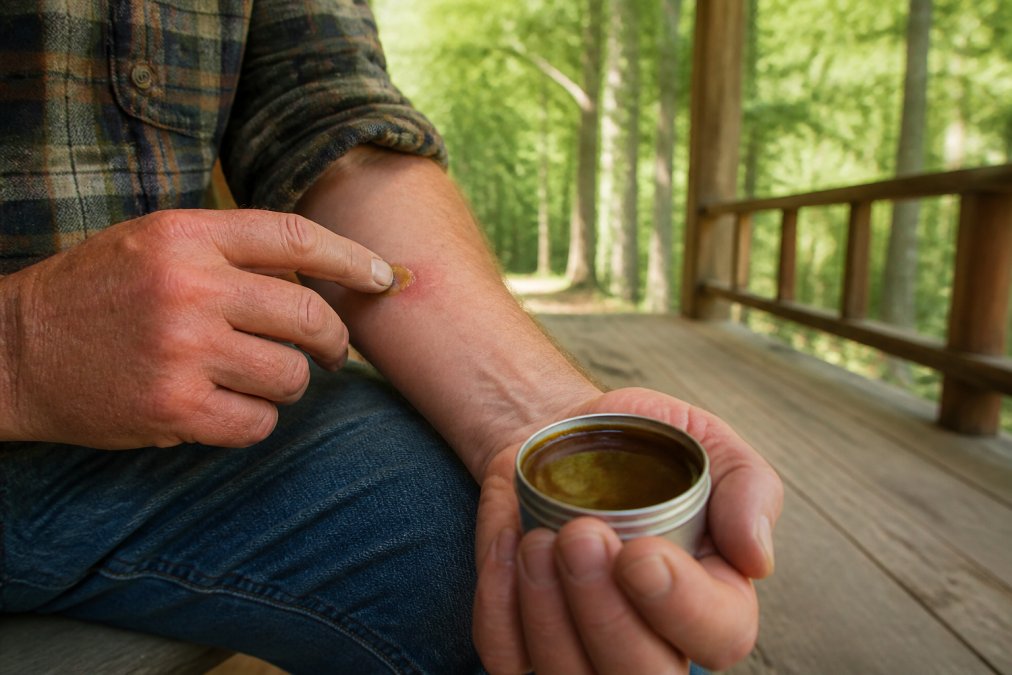
These remedies ease that response:
- Cold compress: Wrap ice in a cloth and hold it on the bite for 10 minutes
- Baking soda paste: Mix baking soda with a little water, apply, and let it dry
- Apple cider vinegar: Dab diluted vinegar on the bite to cut the sting
- Calamine lotion: Coats the skin and cools the itch
- Oatmeal bath: Soothes bites spread across arms and legs
- Aloe vera: Cools hot, irritated skin
- Plantain leaf: Crush a fresh leaf and press it to the bite
A Simple Step-by-Step Routine for Fresh Deer Fly Bites
- Wash the bite with soap and water.
- Apply a cold compress for 10 minutes.
- Pat the skin dry. Don't rub.
- Apply a baking soda paste or calamine lotion.
- Add a pine tar drawing salve if the bite is swollen or angry. Granny's Pine Tar Drawing Salve uses plantain, beeswax, and charcoal to draw out irritants the old-timers swore by.
- Repeat the compress every few hours.
- Keep your hands off it. Scratching breaks the skin and invites infection.
A common mistake is applying remedies to skin that's still dirty. Wash first, or you trap bacteria under whatever you put on next.
Ole Time Woodsman FLY DOPE - SINGLE →

Natural Insect Repellent for Biting Flies: Prevention That Holds Up Outdoors
The best natural insect repellent for biting flies blocks the cues these insects hunt by. Deer flies track movement, dark shapes, and the carbon dioxide you exhale.
What actually helps:
- Pine tar and citronella formulas that mask your scent trail
- Light-colored clothing that stands out less against the sky
- A hat with a sticky patch or a light bandana on the bill
- Long sleeves and pants tucked in at the ankles
- Avoiding open water and marsh edges during peak midday heat
Preventing Infection After a Deer Fly Bite
A deer fly bite is not a puncture, it is a small open cut. That distinction matters, because open cuts are far easier for bacteria to colonize than a closed puncture wound.
The First 10 Minutes Matter Most
Clean the bite before you do anything else. Skip this step and every remedy you apply afterward is sitting on top of bacteria.
- Wash your hands first.
- Rinse the bite with clean running water.
- Wash gently with mild soap and a clean cloth. Do not scrub.
- Pat dry with a clean towel. Do not rub.
- Apply a thin layer of an over-the-counter antibiotic ointment if you have it.
- Cover with a bandage for the first day.
Keep It Clean for the First 48 Hours
Infection risk is highest in the first two days, while the wound is still open.
- Change the bandage at least once a day, and any time it gets wet or dirty.
- Wash the bite again with soap and water each time you change the bandage.
- Keep your fingernails short and clean. Long nails scratch deeper and carry more bacteria.
- If you cannot stop scratching, cover the bite with a bandage or a light sock over the area at night.
Why Scratching Is the Real Enemy
Scratching does two things at once: it reopens the wound, and it pushes bacteria from your skin and fingernails into the cut. Most infected deer fly bites are not infected by the fly, they are infected by the person who could not stop scratching.
Warning Signs to Watch Over the Next Several Days
Check the bite once a day. Look for:
- Red streaks running away from the bite toward the heart
- Warmth and swelling that grow instead of fade after day two
- Pus or a foul smell at the site
- Fever, chills, or swollen lymph nodes near the bite
- Increasing pain rather than decreasing pain
Red streaks and fever are the two signs that most often mean the infection has moved beyond the skin. Get medical care the same day.
When to Stop Home Care and See a Doctor
Home care is enough for a clean, shrinking bite. Switch to medical care if:
- Redness or swelling is spreading after 48 hours
- You see red streaks
- There is pus or a foul smell
- You develop a fever or chills
- The bite is near the eye, ear, or a joint
Common Mistakes to Avoid When Treating Deer Fly Bites
Most slow-healing bites come down to a handful of avoidable errors. Fix these and the itch clears faster.
- Scratching the bite open. This is the number one cause of infection.
- Skipping the wash. Dirt and fly debris left on the skin cause problems.
- Using heat on a fresh bite. Heat boosts swelling. Use cold first.
- Ignoring spreading redness. Red streaks mean infection. Get care.
- Reapplying repellent over bites. Keep repellent on clothing and gear, not broken skin.
Never put a strong repellent directly on an open bite. It stings, and it can irritate skin that's already inflamed. Treat the bite first, then protect the rest of your skin.
Conclusion
Deer fly season tests your patience, and a bite that won't stop itching can ruin a good day outside. Cool the skin, calm the itch, keep the wound clean, and cover up before you head out.
Frequently Asked Questions
What is the best thing to put on a deer fly bite?
Start by washing the bite with soap and cool water, then apply a cold compress for 10 to 15 minutes to reduce swelling. For itching, reach for calamine lotion, hydrocortisone cream, or a baking soda paste. A pine tar drawing salve can also help soothe irritation and support the skin's natural recovery. Avoid scratching so the bite can heal without breaking the skin.
How long does it take for a deer fly bite to go away?
Most deer fly bites settle within a few days to a week. The swelling and sharp pain usually ease within 24 to 48 hours, while itching can linger longer as the histamine response fades. If redness, warmth, or swelling spreads after several days, or you notice pus, that points to a secondary infection and you should see a doctor.
Are there natural ways to prevent deer flies from biting?
Yes. Deer flies target movement, heat, and dark colors, so wearing light clothing and avoiding heavy sweating helps. Natural insect repellent for biting flies, such as pine tar and citronella formulas, can keep them from landing. Ole Time Woodsman Fly Dope uses pine tar, citronella, and camphor, and a few drops on a hat bill, bandana, and shoelaces is enough.
Can you get sick or develop an infection from a deer fly bite?
Deer flies cut the skin with a proboscis and leave an anticoagulant behind, so the wound can become a doorway for bacteria if you scratch it open. Wound irrigation with soap and water, plus keeping the bite covered, lowers that risk. Watch for spreading redness, swelling, or fever, which are signs of a secondary infection that needs medical care.