

Table of Contents
- Why Traditional Outdoor Remedies Still Make Sense
- Natural Insect Repellent Efficacy: What the Active Ingredients Actually Do
- Traditional Skin Care for Outdoor Enthusiasts
- Sustainable Outdoor Gear Maintenance
- Safety, Drug Interactions, and Regulatory Reality
- DIY Mixtures vs Buying a Proven Formula
- How to Judge Whether a Traditional Remedy Actually Works
- Conclusion
- Frequently Asked Questions
Last Updated: September 27, 2026
Why Traditional Outdoor Remedies Still Make Sense
Traditional outdoor remedies are plant- and fat-based preparations used for generations to repel biting insects, repair weathered skin, and protect leather and canvas gear. Ole Time Woodsman has made these formulas since 1882 because they work with materials the land already provided.
Natural Insect Repellent Efficacy: What the Active Ingredients Actually Do
Natural insect repellent efficacy depends on concentration and volatility, not the word "natural." An oil that evaporates in ten minutes cannot protect you for an hour.
Pine Tar, Citronella, and Camphor in Fly Dope
Fly Dope carries 45 percent total active ingredients: pine tar and paraffin at 17.5 percent each, citronella and liquid smoke at 3 percent, camphor at 2 percent, and pennyroyal and oil of bay at 1 percent each, a heavy load compared with most botanical sprays.
The Five Oils Ticks Avoid in Tick Dope
Tick Dope uses cedarwood, geranium, rosemary, lemongrass, and citronella oils at 14 percent total actives.
Traditional Skin Care for Outdoor Enthusiasts
Traditional skin care for outdoor enthusiasts is built around repair, not prevention alone. Wind, sun, insect bites, and split firewood leave hands cracked and knuckles raw, and a barrier salve does more than a thin lotion.
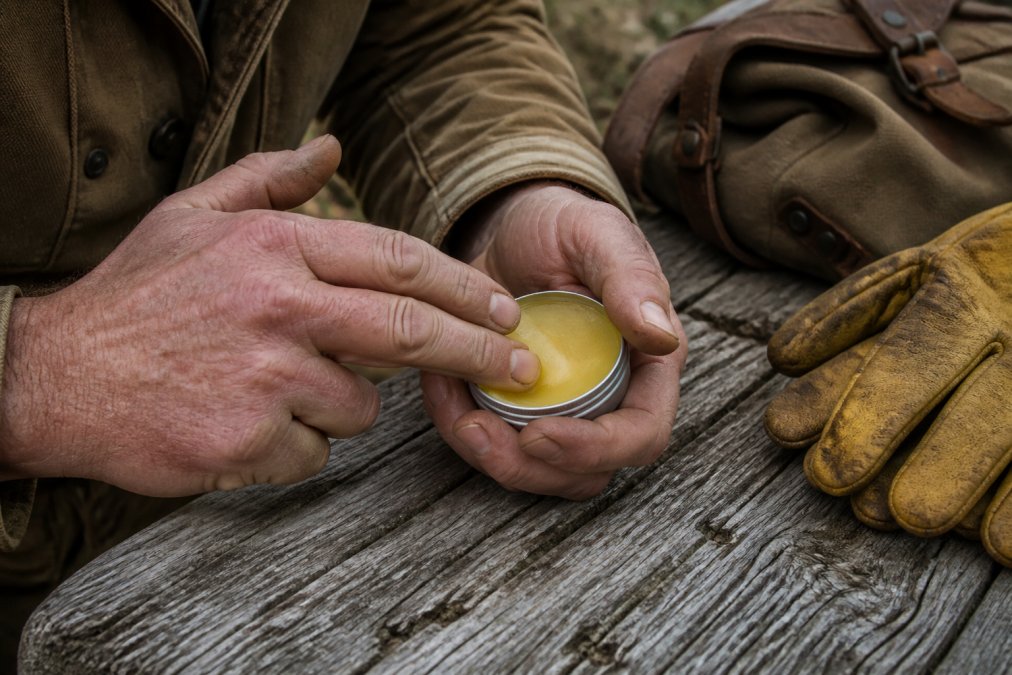
Bug Bites, Splinters, and Cracked Hands
Three problems account for most field first aid, and each has a traditional answer.
- Bug bites: Granny's Ointment calms the itch on contact. Jewelweed has been the folk remedy for poison ivy and sting itch for generations.
- Splinters and stingers: Granny's Pine Tar Drawing Salve uses pine tar, plantain, castor oil, tea tree oil, and charcoal to pull embedded wood, metal, and dirt toward the surface.
- Cracked hands and split lips: Granny's Lip Treatment pairs sunflower oil, beeswax, and beef tallow for a barrier that lasts a full workday.
Sustainable Outdoor Gear Maintenance
Sustainable outdoor gear maintenance means feeding leather and waxing canvas instead of replacing them.
Boot Grease, Dubbin Wax, and Oilskin Wax
Each product solves a different problem, and using the wrong one wastes money and material.
| Product | Best For | Key Ingredients | Price |
|---|---|---|---|
| Boot Grease | Work boots, saddles, heavy leather | Beeswax, beef tallow, cod oil, pine resin | $29.95 |
| Dubbin Wax | Dress leather, gloves, finer goods | Beeswax, beef tallow, fish oil, pine resin | $29.95 |
| Oilskin Wax | Canvas and cotton garments, tents, bags | Beeswax, fish oil, beef tallow, pine resin | $49.95 |
Safety, Drug Interactions, and Regulatory Reality
Traditional does not mean unregulated or risk-free. Botanical repellents contain active compounds that can interact with medications or irritate sensitive skin, the part most articles skip.
How the Label Determines the Rules
The EPA registration process for insect repellents governs what can legally be sold as a repellent and what claims a label may make. A product registered as an insect repellent must carry an EPA registration number and a statement of the percentage of each active ingredient. A product sold only as "fragrance" or "skin care" falls under different rules and is not required to prove repellency.
Which Botanicals Interact With Which Medications
Most essential-oil interactions run through the liver's cytochrome P450 enzyme system. Commonly flagged oils include wintergreen (methyl salicylate), camphor, eucalyptus, pennyroyal, and tea tree. Risk rises with concentrated, repeated, large-area application, a few drops on a hat band is a different exposure than a daily full-body rub.
- Blood thinners (warfarin, apixaban, rivaroxaban): Wintergreen and other salicylate-containing oils can add to bleeding risk. Camphor and eucalyptus are also worth flagging to your pharmacist.
- Seizure medications and sedatives: Pennyroyal and camphor are the two to raise first. Pennyroyal in particular has a long history of toxicity when ingested or applied to large areas.
- Liver-metabolized drugs (statins, some antidepressants, some antifungals): Tea tree and eucalyptus are the usual suspects for altered clearance.
- Topical steroids and prescription skin creams: Applying a botanical layer under or over a prescription cream can change absorption. Space them out and ask the prescriber.
Sensitive Skin, Pets, and Children
- Sensitive skin: Patch test on the inner forearm and wait 24 hours before full application. Repeat the test if you switch products or batches.
- Pets: Not every oil is safe for every animal. Cats in particular have poor ability to metabolize many essential oils, including citrus, tea tree, and pennyroyal. Check with your vet before using any repellent on a dog, cat, horse, or livestock.
- Children: Keep concentrated formulas off small children's hands and faces, where they are most likely to reach eyes and mouth.
Storage and Shelf Life
Heat and sunlight degrade botanical actives. Store tins and bottles cool, dark, and capped, and replace anything separated, rancid, or changed in scent, a formula that smelled sharp in May and flat in September is not protecting you the same way.
Ole Time Woodsman FLY DOPE - SINGLE →
DIY Mixtures vs Buying a Proven Formula
DIY mixtures look cheap until you price the ingredients. The honest answer is knowing which jobs are safe to mix at home and which are not.
Where DIY Works and Where It Does Not
DIY is reasonable for low-stakes, short-duration uses: a scent sachet for a gear bag, a beeswax-and-oil salve for chapped hands, a cedar block in a storage tote. It is a poor fit where a bite carries real risk, ticks, mosquitoes in a disease area, or anything you rely on for hours in the field.
Sourcing Ingredients Safely
If you do mix at home, sourcing is where most people get into trouble.
- Buy from suppliers who publish lot numbers and purity testing. A bottle with no batch information is a bottle you cannot trace if something goes wrong.
- Never forage for pennyroyal, tansy, or other high-toxicity plants unless you have verified identification with a second source. Misidentification is the most common serious DIY injury.
- Skip "essential oil blends" sold as fragrance. They are not formulated for skin and often contain synthetic carriers.
- Keep carrier oils fresh. Rancid sunflower or olive oil will spoil a salve faster than the actives will fade.
The Real Cost Math
A home recipe usually needs four to six oils, a carrier, and a container. Buying each oil in a small bottle often costs more than one formulated product. The break-even point is roughly when you make the same recipe repeatedly for a household or group, not for one person for one season.
Why a Proven Formula Wins on Four Fronts
- Measured actives: You know the exact percentage of each oil, printed on the label.
- Consistency: The same bottle performs the same way every time, batch to batch.
- Shelf life: Formulated products are built to last through a season or more, with stability testing behind them.
- Accountability: A guarantee means the maker stands behind the result, and there is a company to call if something goes wrong.
Ole Time Woodsman still makes its Fly Dope, Tick Dope, and Chigger Dope from the original recipes, with a money-back guarantee on the repellents.

How to Judge Whether a Traditional Remedy Actually Works
Test any remedy the same way you would test a modern one: controlled, repeated, and honest about the variables.
- Pick a known bad area. Use a spot where you have been bitten before.
- Apply to one side only. Treat one arm and leave the other bare as a control.
- Give it 30 minutes. Most failures show up in the first half hour.
- Log bites by location. Count bites on treated versus untreated skin.
- Repeat on three separate outings. One good day proves nothing.
- Check the label percentages. A formula with 3 percent total actives will not match one with 45 percent.
- Try a second product before giving up on the category. Failure on mosquitoes does not predict failure on ticks.
Conclusion
The hardest part of switching to traditional remedies is trusting something your grandfather used. That trust is earned one field test at a time.
Frequently Asked Questions
Are traditional outdoor remedies effective compared to synthetic alternatives?
It depends on the pest and the formula. Traditional outdoor remedies work by combining plant oils and resins at concentrations high enough to mask your scent and deter biting insects. Ole Time Woodsman Fly Dope, for example, carries 45% total active ingredients, including pine tar, citronella, camphor, and oil of bay. Tick Dope uses cedarwood, geranium, rosemary, lemongrass, and citronella oils. These are not diluted trace amounts. The tradeoff is reapplication frequency: natural oils evaporate faster than synthetic actives, so plan on reapplying every few hours in heavy pressure.
Are traditional outdoor remedies safe for regular use on skin and gear?
The formulas at Ole Time Woodsman are built on ingredients with long outdoor use histories: beeswax, tallow, cod oil, pine resin, plantain, chamomile, and jewel weed. Granny's Ointment and Granny's Honey Balm are made without parabens or steroids. That said, essential oils can still trigger reactions in sensitive people. Patch test on your inner forearm for 24 hours before a full application, especially if you have reacted to bug sprays before. Keep repellents away from eyes, open cuts, and mucous membranes.
How do traditional remedies fit into sustainable outdoor gear maintenance?
Leather and canvas last decades when conditioned properly, which keeps gear out of landfills. Ole Time Woodsman Boot Grease uses beeswax, beef tallow, cod oil, and pine resin to restore dried leather and protect stitching. Oilskin Wax does the same for canvas coats, hats, tents, and bags using a Civil War-era formula. Both are reapplied annually rather than replaced, so a single $29.95 to $49.95 tin extends the working life of gear that would otherwise cost hundreds to replace.
How can you verify the efficacy of traditional outdoor solutions before buying?
Check three things: the active ingredient percentages on the label, the specific pests the formula targets, and the refund policy. Ole Time Woodsman lists exact concentrations, such as 17.5% pine tar in Fly Dope and 5% clove oil in Chigger Dope, and backs Tick Dope and Chigger Dope with a money-back guarantee. A brand willing to publish its numbers and stand behind the result is a stronger signal than heritage branding alone.