

Table of Contents
- How DEET Acts as a Solvent on Synthetic Fabrics
- Which Fabrics and Gear Are Most Vulnerable to DEET
- DEET vs Picaridin for Outdoor Gear
- Is DEET Safe for Waterproof Coatings?
- How to Remove Insect Repellent Stains From Clothing
- Protecting and Restoring Canvas, Cotton, and Leather Gear
- Frequently Asked Questions
Last Updated: September 24, 2026
How DEET Acts as a Solvent on Synthetic Fabrics
That is why DEET damages outdoor fabrics: it is a solvent, not just a repellent. That single fact explains why a spray meant for skin can soften a tent wall, cloud a jacket window, or strip the finish off a hiking pole grip. N, N-diethyl-meta-toluamide was developed for military use and remains the most widely studied repellent on the market, but its chemistry does not distinguish between a mosquito's antennae and the plastic buckle two inches from your wrist.
What Makes DEET Chemically Aggressive
DEET is a small, polar molecule that dissolves many synthetic polymers and plasticizers on contact. It stays liquid on fabric longer than water-based alternatives, which gives it more time to migrate into coatings and dyes. The CDC guidance on insect repellent use notes that DEET can damage plastics, synthetic fabrics, and painted surfaces, and recommends washing treated skin before handling gear. That warning is not a formality.
Plasticizers, Dyes, and Surface Finishes at Risk
Plasticizers are the flexible compounds mixed into vinyl, polyurethane, and some coated nylons to keep them soft. DEET pulls plasticizers out of the polymer matrix, which is why treated plastic turns tacky, then brittle. Dyes behave the same way: the solvent lifts pigment from the fiber surface, and surface finishes dissolve first.
Which Fabrics and Gear Are Most Vulnerable to DEET
Synthetic fabrics are the most vulnerable to DEET, and the damage is often permanent. Natural fibers resist it better, but "better" is not "immune."
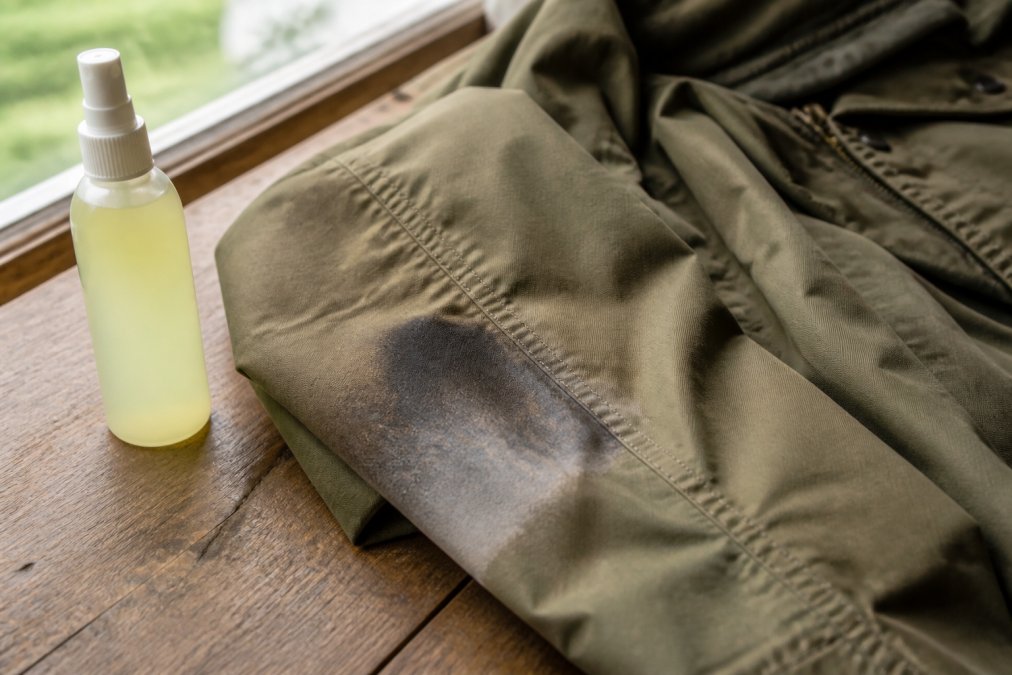
Synthetic Polymers: Nylon, Polyester, Spandex, Rayon
Nylon, polyester, spandex, and rayon all absorb DEET into their molecular structure, and each fails differently. Nylon loses tensile strength and develops a gummy surface. Polyester holds its shape but sheds dye, leaving pale streaks along the spray path. Spandex is the worst case: the elastane fibers relax and the garment loses its stretch permanently. Rayon behaves closer to cotton but still discolors under repeated exposure.
Natural Fibers and Treated Canvas: A Different Story
Cotton, wool, and untreated canvas tolerate DEET far better than synthetics because their molecular structure does not plasticize the same way. The catch is the treatment. Waxed canvas, oilskin, and factory-applied DWR finishes sit on the fiber surface, and DEET dissolves those coatings just as readily as it dissolves plasticizer. A waxed barn coat sprayed near the collar will show a dull, stripped patch.
DEET vs Picaridin for Outdoor Gear
Picaridin is the better choice for anyone who handles gear while wearing repellent. It is chemically inert toward most plastics, synthetic fabrics, and coated surfaces, which is why gear manufacturers and dermatologists increasingly point to it as the default for gear-heavy trips. DEET remains slightly more effective against certain tick species, but that edge rarely justifies replacing a rain shell or a pack strap.
| Feature | DEET | Picaridin |
|---|---|---|
| Effect on synthetics | Dissolves plasticizers, dyes, coatings | Chemically inert to most synthetics |
| Effect on plastics | Softens and clouds many plastics | Safe on most plastics |
| Odor | Strong, solvent-like | Faint, often described as mild |
| Duration on skin | Long-lasting at high concentrations | Comparable at 20% formulations |
| Best for | Heavy tick pressure, deep woods | Gear-heavy trips, everyday use |
Material Compatibility at a Glance
The real question is what happens when a specific repellent meets a specific fabric. The table below maps common outdoor materials against DEET concentrations and picaridin. Treat it as a planning tool, not a guarantee, coatings vary by manufacturer, and a test on an inside seam is always the safest first step.
| Material | DEET 10-30% | DEET 30-50% | DEET 50%+ | Picaridin 20% |
|---|---|---|---|---|
| Nylon (uncoated) | Dye loss possible | Softening, dye loss | Structural damage likely | No known effect |
| Polyester | Dye loss possible | Dye loss likely | Dye loss, possible finish damage | No known effect |
| Spandex / elastane | Stretch loss possible | Stretch loss likely | Permanent stretch loss | No known effect |
| Rayon | Discoloration | Discoloration, weakening | Structural damage likely | No known effect |
| Gore-Tex and PU laminates | DWR stripping | DWR stripping, membrane risk | Delamination likely | No known effect |
| Waxed canvas / oilskin | Finish stripping | Finish stripping | Finish stripping, fiber risk | No known effect |
| Untreated cotton / wool | Minimal | Minimal | Some finish loss | No known effect |
| Leather | Darkening, oil loss | Darkening, stiffening | Cracking risk | No known effect |
| Polycarbonate (lenses, buckles) | Clouding | Clouding, crazing | Cracking | No known effect |
| Silicone (seals, straps) | Swelling | Swelling, tackiness | Failure | No known effect |
Structural vs. Cosmetic: Why the Distinction Matters for Repellent Choice
Understanding why DEET damages outdoor fabrics means separating two outcomes: cosmetic and structural damage. Cosmetic damage, dye loss, DWR stripping, dulled finishes, is annoying but recoverable. Structural damage, softened nylon, relaxed elastane, delaminated membranes, is permanent and turns functional gear into scrap. Severity depends on concentration, exposure time, and the specific polymer.
When DEET Still Wins
There are real situations where DEET remains the right call. In areas with heavy tick pressure, particularly the Northeast and upper Midwest during peak season, DEET at 20-30% has a documented edge over picaridin against certain tick species. Backcountry travelers there often carry DEET as a backup even if picaridin is their daily driver.
Is DEET Safe for Waterproof Coatings?
No, DEET is not safe for waterproof coatings. It attacks both the durable water repellent (DWR) finish on the outer face and the polyurethane membrane laminated inside. DWR is a thin fluoropolymer or wax-based layer that beads water; DEET dissolves it on contact, and the fabric starts wetting out within a single season. The polyurethane membrane underneath is worse off.
What Happens to DWR and Polyurethane Membranes
The sequence is predictable. First, water stops beading and the fabric darkens in the rain. Then the membrane begins to separate, visible as bubbles or a crinkled inner surface. By the time the jacket leaks, the damage is structural, and no reapplication of DWR spray will fix a delaminated membrane. The FTC guidance on waterproof and water-repellent claims is worth reading if you're shopping for replacements, because "waterproof" and "water-resistant" are not interchangeable terms, and neither survives DEET exposure.
How to Remove Insect Repellent Stains From Clothing
Act within the first hour if you can. The longer DEET sits on a synthetic surface, the deeper it migrates into the polymer matrix, and the less of the damage is reversible. Blot the stain with a dry cloth, then flush with cool water, hot water drives the solvent deeper and can set dye transfer permanently. Apply dish soap, work it in, and let it sit ten minutes before rinsing.
Cosmetic Staining vs. Structural Damage: Know Which One You Have
Before you spend an afternoon trying to fix a jacket, determine what actually happened. The two failure modes look similar in photos and behave completely differently in the field.
-
Pale streaks or bleached patches along the spray path
-
A dull or chalky area where the fabric used to bead water
-
Color transfer onto a cloth when you wipe the spot
-
A faint solvent smell that fades after washing
-
A gummy, tacky, or slightly sticky surface that does not dry out
-
Fabric that feels thinner or stretches more than the surrounding area
-
Visible bubbling, crinkling, or separation on the inside of a laminated shell
-
A seam that pulls apart under light tension
-
Elastic panels that no longer snap back
A Material-by-Material Triage Guide
Nylon and nylon blends. If the surface is gummy, the polymer has softened and the damage is structural. If the surface is dry but discolored, the damage is cosmetic and a cool-water wash plus a DWR reapplication will usually restore function. Nylon that has gone tacky should not be trusted for load-bearing use, inspect pack straps, harness webbing, and tent guy-out points first.
Step-by-Step Stain Removal and Gear Restoration
- Blot, do not rub, to avoid spreading the solvent.
- Flush with cool water for 60 seconds.
- Apply dish soap and let it sit for 10 minutes.
- Rinse and inspect under bright light.
- For dye transfer on synthetics, dab with isopropyl alcohol.
- Air dry away from heat.
- Reapply DWR or wax finish once the fabric is fully dry.
- For structural damage, stop here, no finish will restore lost tensile strength.
Restoration matters as much as removal. A stripped wax finish on canvas can be rebuilt with a proper wax treatment, and that is where [Ole Time Woodsman's Oilskin Wax](https://www.oletimewoodsman.com/products/ole-time-woodsman-oilskin-wax-the-original-1800s-civil-war-formula-for-waterproofing-canvas-and-cotton-garments) earns its keep. Melt the can in a saucepan of water, brush it on generously, then heat the fabric with a hair dryer until the wax disappears into the weave.

Protecting and Restoring Canvas, Cotton, and Leather Gear
For gear that has already taken a hit, canvas, cotton, and leather are the recoverable materials. Waxed canvas can be re-waxed. Leather can be conditioned and re-oiled. Synthetics cannot be un-dissolved, which is why the quart-size Oilskin Wax is a smarter buy for anyone running a ranch crew or a fleet of canvas tarps. The formula dates to the 1800s, uses beeswax, fish oil, beef tallow, and pine resin, and it rebuilds a stripped finish instead of just sitting on top of it.

Frequently Asked Questions
Does DEET ruin synthetic fabrics like polyester and nylon?
Yes. DEET acts as a solvent on synthetic polymers, and nylon, polyester, spandex, and rayon are all vulnerable. It can melt plasticizers, lift dyes, and break down fiber coatings, leaving stiff, discolored, or weakened patches. Damage often shows up as a greasy stain or sticky spot within hours. Technical gear with waterproof membranes or DWR finishes is especially at risk because DEET degrades the protective layers that keep you dry. If you already see damage, wash the item promptly to remove residue.
Is DEET safe for waterproof coatings on rain jackets and tents?
No. DEET attacks the polyurethane and DWR coatings that make rain gear waterproof. Once the coating breaks down, water soaks through instead of beading up, and the fabric can feel tacky or gummy. If you need repellent around waterproof gear, choose a picaridin-based formula and apply it to skin before dressing, not directly to the jacket. For canvas and cotton items, Ole Time Woodsman Oilskin Wax ($49.95) restores water repellency on natural fabrics, though it is not intended for synthetic shells.
How do I remove insect repellent stains from clothing?
Act fast. Blot excess repellent, then rinse the area with cool water. Apply a small amount of liquid dish soap or a gentle laundry detergent directly to the stain and work it in with your fingers. Let it sit for 10 to 15 minutes, then wash on a cool cycle. Avoid hot water and the dryer until the stain is gone, since heat can set it permanently. For stubborn residue on canvas or cotton, a second wash with a mild detergent usually lifts what remains.
Are there insect repellent alternatives that are safe for technical fabrics?
Picaridin is the most widely recommended alternative because it does not dissolve plastics or synthetic fibers and performs comparably to DEET at common concentrations. Permethrin-treated clothing is another option, since the treatment bonds to fabric rather than sitting on the surface. For natural-fiber gear like canvas, cotton, and leather, traditional wax treatments such as Ole Time Woodsman Oilskin Wax protect and restore water repellency without the solvent risks DEET poses to synthetics.