

Table of Contents
- What Makes Traditional Insect Repellents Different
- DEET-Free Insect Repellent Alternatives: What Outdoor Enthusiasts Need to Know
- How to Choose a Safe Insect Repellent for Your Needs
- Natural Skin Care for Outdoor Enthusiasts: Protecting Your Skin and Your Gear
- Environmental Impact: Why Biodegradable Formulas Matter
- Cost-Benefit Analysis of Long-Term Traditional Repellent Use
- Conclusion
- Frequently Asked Questions
Last Updated: September 15, 2026
What Makes Traditional Insect Repellents Different
Traditional insect repellents are plant- and mineral-based formulas that rely on essential oils, pine tar, and other natural actives to mask the scents biting insects use to find you. At Ole Time Woodsman, we've been making them the same way since 1882, which makes us a fair judge of what they do well and where they fall short.
The core idea is simple: if insects cannot find you, they cannot bite you. Instead of poisoning a bug on contact, a traditional repellent disrupts the chemical signals that draw mosquitoes, black flies, and ticks toward a warm body. That's a fundamentally different approach from synthetic formulas, and it's why people who spend real time outdoors keep coming back to it.
Below, we'll break down how these formulas work, how they compare to synthetics, and how to pick one that fits your skin and your terrain.
How Traditional Formulas Work Against Biting Insects
Biting insects locate hosts through scent receptors tuned to carbon dioxide, lactic acid, and body heat. Traditional repellents interfere with that tracking by layering strong plant volatiles, like citronella, camphor, and pine tar, over your own scent signature. The insect loses the trail.
This is why application matters more than volume. A few drops on a hat bill, a bandana, and your shoe laces often outperforms a heavy spray across exposed skin. The Centers for Disease Control and Prevention maintains guidance on repellent use and vector-borne disease prevention that's worth reading before any backcountry trip, because how you apply matters as much as what you apply.
Key Active Ingredients in Heritage Repellents
Traditional formulas earn their keep through concentration, not branding. Ole Time Woodsman Fly Dope carries 45% total active ingredients: pine tar and paraffin at 17.5% each, plus citronella, liquid smoke, camphor, pennyroyal, and oil of bay.

Tick Dope takes a different route with 14% actives built from cedarwood, geranium, rosemary, lemongrass, and citronella, the five fragrances ticks avoid most. Chigger Dope pushes 20% actives from clove, tea tree, ginger, and eucalyptus.
| Product | Active Ingredients | Total Actives | Primary Target |
|---|---|---|---|
| Fly Dope | Pine tar, paraffin, citronella, camphor | 45% | Flies, mosquitoes, gnats |
| Tick Dope | Cedarwood, geranium, rosemary, lemongrass | 14% | Ticks |
| Chigger Dope | Clove, tea tree, ginger, eucalyptus | 20% | Chiggers |
DEET-Free Insect Repellent Alternatives: What Outdoor Enthusiasts Need to Know
DEET-free insect repellent alternatives swap synthetic actives for plant-derived oils that interrupt insect scent tracking. They work, but they work differently, and understanding the trade-off is the difference between a good trip and a miserable one.
The honest comparison: DEET is the benchmark against which everything else is measured, and it lasts longer per application. Natural formulas typically need reapplication every few hours, especially in heat and humidity. What you get in return is a formula that won't degrade nylon, won't melt plastic gear, and won't leave your skin stinging.
Comparing Synthetic vs. Natural Active Ingredients
Synthetics like DEET and picaritin are designed for maximum protection duration. They bind to skin and stay active for hours. The trade-offs show up in dermal absorption, potential neurotoxicity concerns at high exposure, and their tendency to damage synthetic fabrics and plastics.
Natural actives are more volatile. They evaporate faster, which is exactly why they need reapplication and exactly why they leave no residue behind. For anyone wearing technical gear or handling a rifle stock, that volatility is a feature.
Efficacy Rates Against Specific Insects
No natural repellent performs identically across every biting insect, and anyone who claims otherwise is selling something. Black flies, deer flies, and no-see-ums respond to different scent cues than mosquitoes do. Ticks respond to yet another set.
This is why serious outdoor workers carry more than one formula. A mosquito and fly blend for the trail, a tick-specific blend for tall grass and brush edges. The Environmental Protection Agency's guidance on repellent registration explains how actives are tested and labeled, which helps you read a bottle honestly.
How to Choose a Safe Insect Repellent for Your Needs
Choosing a safe insect repellent comes down to three questions: what's biting you, how long are you outside, and how does your skin react to plant oils? Answer those and the choice narrows fast.
Safety Profiles and Potential Side Effects
Natural does not automatically mean reaction-free. Essential oils are concentrated, and some people develop skin irritation or allergic reactions to specific plant compounds, particularly clove and eucalyptus. Patch-test any new formula on a small area of skin before a long day outdoors.
The upside is that traditional formulas avoid the dermal absorption and neurotoxicity questions that surround high-concentration synthetics. For families, pets, and anyone applying repellent daily through a work season, that matters.
Guidelines for Safe Application
Apply to clothing first, skin second, and never on broken skin. Keep it away from eyes and mouth. Reapply after heavy sweating or rain, and wash treated skin when you come inside. Store bottles out of direct sun, since heat degrades volatile oils faster than it degrades synthetics.
Natural Skin Care for Outdoor Enthusiasts: Protecting Your Skin and Your Gear
Natural skin care for outdoor enthusiasts means treating repellent as part of a broader routine, not a standalone product. The same oils that keep insects off your skin can also protect the leather, canvas, and cotton gear that takes a beating season after season.
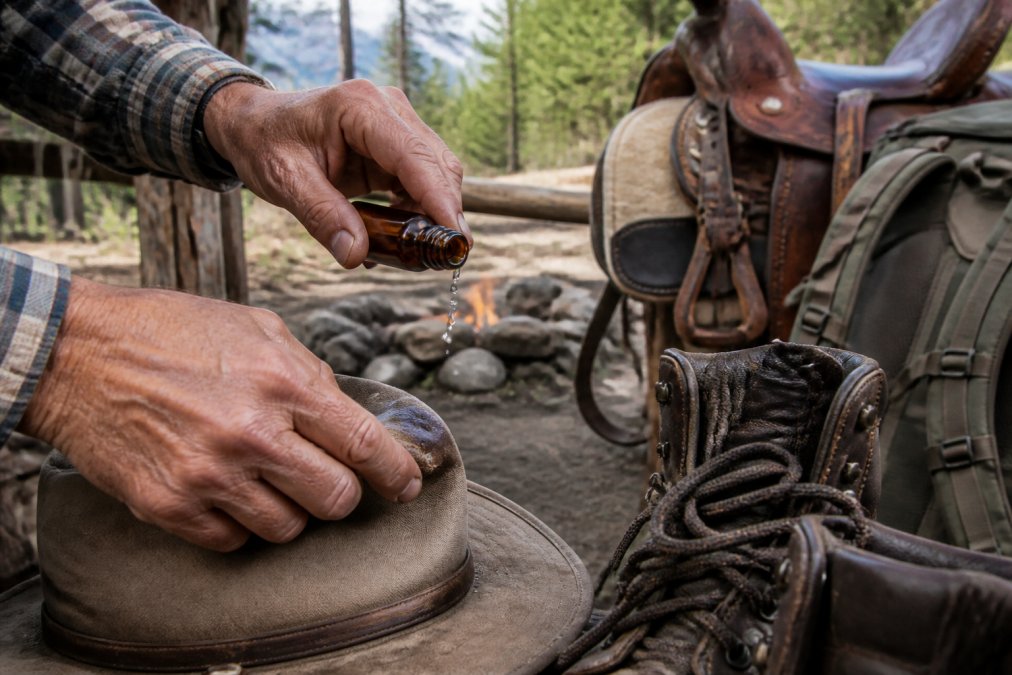
That dual purpose is where heritage formulas earn their place. Ole Time Woodsman Fly Dope runs $24.95 for a single bottle, and a few drops go a long way on a hat band or a pair of laces. Tick Dope, also $24.95, is formulated to be safe for people and pets, which matters on a ranch or farm where the whole crew, human and animal, is outside all day.

For families juggling camping trips and gear maintenance, the National Park Service guidance on tick and insect precautions is a useful reference for what to check after time in the brush.
Environmental Impact: Why Biodegradable Formulas Matter
Biodegradable formulas break down through microbial and photolytic processes rather than persisting in soil and sediment. That distinction matters most for anyone applying repellent near streams, ponds, or working farmland, where runoff carries everything downhill.
The mechanism is straightforward. Plant-derived terpenes and essential-oil volatiles, citronella, camphor, cedarwood, lemongrass, are structurally similar to compounds soil bacteria and aquatic microbes already encounter in leaf litter and pine duff. Microbial enzymes recognize them, cleave them, and mineralize them into carbon dioxide and water. Synthetic actives like DEET and picaridin are designed for persistence on skin, and that same persistence is what makes them slower to break down once they leave it. DEET has been detected in surface water downstream of heavy recreational use, and its degradation in cold, low-oxygen water is markedly slower than in warm, aerated streams.
That said, "biodegradable" is not a free pass. A concentrated oil poured into a trout stream is still a pollutant, and repeated application at the same campsite still loads the soil.
Practical Mitigation: Reducing Footprint Without Giving Up Protection
The environmental case for traditional repellents is strongest for people who apply them repeatedly in the same place: ranch crews, forestry workers, and anyone whose daily routine puts them near water or livestock. The case gets stronger still when you pair the formula with the application habits above.
Cost-Benefit Analysis of Long-Term Traditional Repellent Use
Conclusion
Frequently Asked Questions
Are traditional insect repellents effective against modern pests like ticks and black flies?
Yes, many traditional formulas remain highly effective. For example, Ole Time Woodsman Tick Dope uses a 14% active ingredient blend of cedarwood, geranium, rosemary, lemongrass, and citronella oils, which are among the natural fragrances ticks hate most. Their Fly Dope contains 45% active ingredients including pine tar, citronella, and camphor, targeting flies, mosquitoes, and gnats. These heritage recipes have protected outdoor workers and enthusiasts for over 140 years, proving their ongoing efficacy against contemporary biting insects.
How do DEET-free insect repellent alternatives compare to synthetic options for sensitive skin?
DEET-free alternatives like those from Ole Time Woodsman rely on plant-based oils such as citronella, cedarwood, and eucalyptus rather than synthetic chemicals. This makes them less likely to cause skin irritation or allergic reactions, especially for people with sensitive skin. Traditional repellents avoid concerns about dermal absorption and neurotoxicity associated with high-concentration DEET products. However, natural formulas may require more frequent reapplication, typically every 2-4 hours, compared to some synthetic options that offer longer protection windows.
What should I look for when choosing a safe insect repellent for my family and pets?
Start by checking the active ingredients. Safe insect repellents for families often use essential oils like citronella, clove, tea tree, and eucalyptus. Look for products explicitly labeled safe for people and pets, such as Ole Time Woodsman Tick Dope and Chigger Dope. Avoid formulas with unknown synthetic additives. Also consider the application method: traditional repellents often work by masking your scent rather than killing insects, which reduces chemical exposure. Always patch-test on a small skin area first, and follow label guidelines for safe application.
Are traditional repellents more environmentally friendly than modern synthetic chemicals?
Traditional repellents made with natural essential oils tend to biodegrade faster and have less environmental persistence than synthetic chemicals like DEET, which can contaminate waterways and harm aquatic life. Natural formulas break down more readily, reducing risks to biodiversity and waterway pollution. However, even natural repellents should be used responsibly. Choosing biodegradable, eco-friendly options from heritage brands supports sustainability while still providing effective protection against biting insects.